

Rooftop turf: waterproofing and drainage design essentials
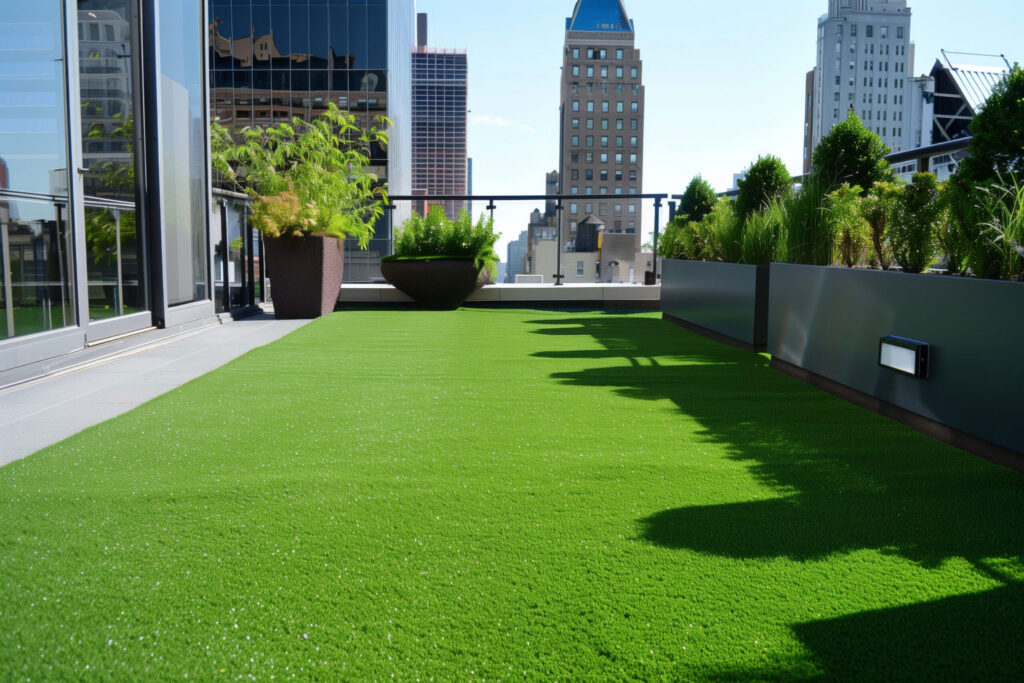
Rooftop turf (including astro turf roof terrace and artificial turf on flat roof installs) is one of the fastest ways to make a roof terrace feel like a proper outdoor room—cooler underfoot than tiles, softer for kids, and more inviting for entertaining. But rooftops are unforgiving: if water can’t escape quickly and safely, you risk ponding, smells, membrane damage, and ultimately leaks into the building.
This guide breaks down the essentials to get rooftop turf right in Perth: how waterproofing should be handled, how drainage should be designed, and what to look for when specifying rooftop turf so it performs year-round.
Is artificial grass waterproof?
This is the most common question: is artificial grass waterproof? The practical answer is:
- The turf fibres and backing are water-resistant (they won’t “rot” like natural lawn).
- Most products are designed to be water-permeable, with drainage holes or permeable backing so water passes through.
- However, turf is not the waterproofing membrane. Your roof still needs a correctly designed and installed external waterproofing system underneath.
So if you’re searching for artificial grass waterproof or fake grass waterproof, think of turf as the finish layer—your building protection comes from the membrane system and drainage design below it.
The “right” rooftop turf build-up (layer by layer)
A reliable artificial turf roof system is typically a set of layers that work together:
1) Structural roof + falls (slope)
Roofs and terraces should be built so water naturally runs to drainage points (not into corners). Australian guidance commonly references positive falls so water drains to an outlet, with a minimum often cited around 1:100 for finished surfaces.
2) Waterproofing membrane (the non-negotiable layer)
For external above-ground waterproofing, the NCC references compliance with AS 4654.1 and AS 4654.2.
This layer is what protects the building. Turf must never be treated as a substitute.
3) Protection + separation layer
A protection board/geotextile (spec varies) helps prevent abrasion or point loading against the membrane important because rooftop turf areas are often used for furniture, foot traffic, and entertaining.
4) Drainage layer (especially important on “flat” roofs)
This is where rooftop turf succeeds or fails. A drainage mat/cell can create clear pathways for water to move toward outlets even if the turf is permeable while also reducing the chance of “boggy” areas after heavy rain.
5) Shockpad (optional)
Used for comfort, playground-like softness, or to reduce feel of substrate irregularities. On roofs, it must be compatible with drainage and not trap water.
6) Artificial turf surface
The visible finish chosen for UV stability, comfort, and the intended use (lounging, pets, putting, etc.).
Waterproofing essentials before turf goes down
Before anyone measures turf, confirm these waterproofing fundamentals:
Membrane specification and certification
Use a roof membrane system designed for external above-ground exposure and installed by qualified trades. The NCC’s reference to AS 4654.1/4654.2 is a good baseline for what “fit for purpose” looks like.
Critical detailing: terminations, upturns, and penetrations
Most rooftop waterproofing failures happen at:
- Door thresholds and balcony/terrace transitions
- Parapets and edge terminations
- Pipe penetrations, posts, and balustrade fixings
- Planter boxes and garden edges
Turf can conceal early warning signs, so details must be right before the green layer goes on.
Protect the membrane from traffic and maintenance
Even the best membrane can be damaged by dragging furniture, sharp table feet, or frequent maintenance access. A designed protection layer and correct edge finishing reduces that risk.
Drainage design essentials (what to insist on)
Drainage isn’t only “does water get through the turf?”. It’s: does water leave the roof quickly and predictably?
Positive falls to drainage outlets
Aim for consistent falls toward outlets so water doesn’t pond under the turf. Guidance commonly cites a minimum fall around 1:100 to ensure water drains to an outlet.
Redundancy: primary outlet + overflow
Roofs should have an “if blocked, then what?” plan:
- Primary roof drain(s) sized appropriately
- Overflow provisions (often via overflow outlets/scuppers depending on design) so water doesn’t back up into the building fabric
Keep drains accessible after turf installation
Design for inspection and cleaning:
- Turf edges that can be lifted near outlets
- Inspection zones/grates that remain reachable
- No permanent glue-down over drain access points
Manage fines and debris
Even with a drainage layer, sediment and leaf litter can migrate. A filter/separation layer helps keep the drainage layer functioning, especially on roof terraces exposed to windblown debris.
Choosing turf for a roof terrace in Perth
When specifying turf for rooftop installs, prioritise performance factors that matter on roofs:
- Heat and UV stability: Perth sun is intense—choose turf designed for UV resistance and outdoor exposure.
- Comfort underfoot: Rooftops often double as lounging zones; a softer product can make the space more usable.
- Drainage compatibility: If you’re using a drainage mat/cell, ensure the turf backing and underlay system still allows vertical flow.
- Edge finishing: Neat edges reduce trip hazards and help keep the system tidy—especially around planters and thresholds.
If your roof terrace is for pets, consider odour-management routines and drainage-first design (standing liquid is the enemy).
Installation notes that prevent expensive mistakes
- Don’t trap water: Avoid build-ups that create a “bath” under the turf.
- Avoid fully sealing the perimeter: Rooftop turf needs a path for water to reach outlets.
- Plan for wind uplift: Rooftops can be windy installation methods should account for uplift risks (without compromising drainage access).
- Use experienced installers: Rooftop work is less forgiving than backyards; detailing is everything.
Jack’s Synthetic Grass already services rooftop applications in Perth so you’re not guessing your way through a niche install.
Considering rooftop turf, a flat-roof terrace, or a balcony refresh? Speak to Jack’s team about a system that’s designed around waterproofing protection and drainage performance not just looks.
Frequently Asked Questions
Turf materials are water-resistant and usually water-permeable, but turf is not the roof’s waterproofing membrane. The roof membrane and drainage design do the waterproofing work.
Yes, if the roof has compliant waterproofing, positive falls to outlets, protection layers, and accessible drainage points.
Often, yes. A drainage mat/cell can help move water to outlets reliably and reduce the risk of water sitting under the turf.
It can if installed without protection layers, if furniture point-loads the surface, or if edges are poorly detailed. Protection/separation layers reduce risk.
Remove debris regularly, rinse as needed, and keep outlets/inspection points clear—especially after storms and windy days.
Sometimes. Rooftops often require wind/uplift considerations, so the fixing approach should be chosen for the specific site and detailing.
Quality turf can be slip-resistant, but slip risk increases when drainage is poor and water ponds. Drainage design is the key control.


