Choosing Turf for Perth Homes: Pile Height vs Density vs Yarn Type
If you’ve searched best pile height artificial grass Perth, you’ve probably seen a lot of “30mm vs 40mm” debates. Pile height matters but it’s only one piece of what makes turf look real and perform in a Perth backyard. The best results come from balancing pile height, density, and yarn type to match how your household actually uses the space (kids, pets, entertaining, high-traffic paths, or low-traffic front lawns).
Below is a practical way to compare specs so you can choose confidently—and avoid paying for a “tall” turf that still ends up looking flat.
What do these turf specs actually mean?
Pile height (aka blade height)
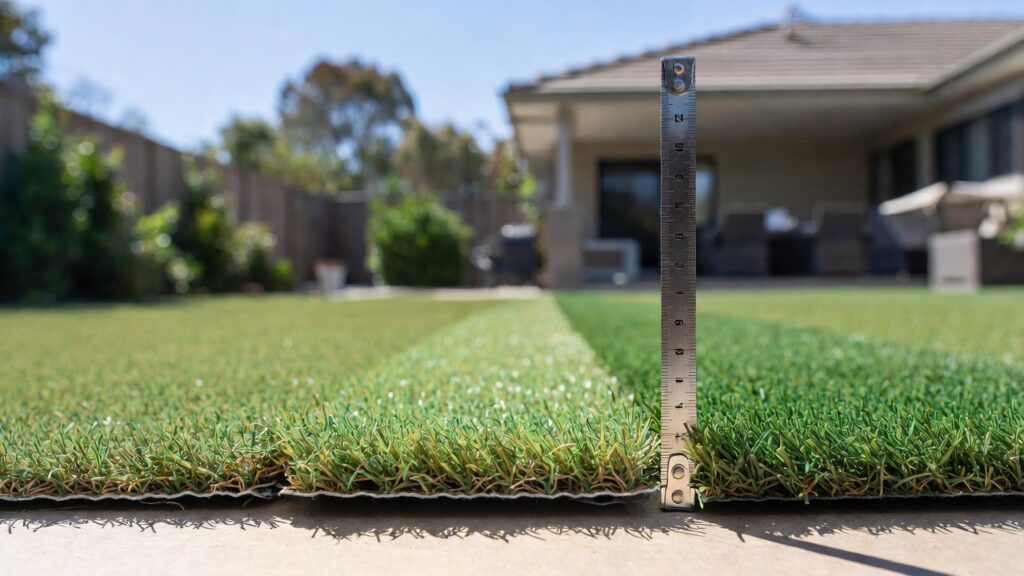
Artificial grass pile height is the length of the fibre above the backing (usually in mm). Taller piles can look lush, but they can also be more prone to “laying over” if the density/support isn’t there.
Density (fullness + support)
Density is how many fibres are stitched into the turf (often expressed via stitch rate, gauge, or face weight). Denser turf generally looks more “full” and can help blades hold upright longer. Jack’s own guidance highlights pile height and density as key indicators of quality.
Yarn type (the fibre material)
Yarn is the plastic polymer that forms the blades. Common yarn materials include polyethylene (PE), polypropylene (PP), and nylon, each with different feel and resilience characteristics.
Step 1: Start with use-case, then pick a pile height range
There isn’t one “best” height for every Perth home. A simple rule: choose the pile height that fits your use, then let density do the heavy lifting for realism.
For most Perth family backyards (general use)
A mid-range pile is typically the safest choice natural-looking without being too “floppy.” Jack’s guidance commonly points to 30–40mm as a sweet spot for a lush look when paired with solid stitch density.
For pets, heavy foot traffic, and kids’ play
If your lawn gets hammered (dogs zooming, kids running, entertaining), slightly shorter piles often perform better because they’re easier to groom and less likely to mat. One Australian turf guide recommends 30–35mm for high-traffic yards, pets, schools and pre-schools.
For front yards (lower traffic, higher “street appeal”)
You can lean a bit taller if density is strong and the yarn is resilient because the turf isn’t being crushed daily.
Practical Perth tip: If you love the look of longer turf, make sure you’re not buying height “instead of” density. Height without density often ends up looking thinner.
Step 2: Use density to decide whether turf looks premium (or cheap)
If pile height is the headline, density is the engine.
What higher density usually improves
- Fuller appearance (less backing visible)
- Better support for upright blades
- More consistent look in high-use zones
What to ask an installer or supplier
Not every brand publishes specs in the same way, but you can ask for:
- stitch rate (stitches per metre)
- gauge (distance between stitch rows)
- face weight / pile weight (how much fibre per m²)
If a quote only talks about “40mm luxury pile” with no density info, you’re missing the spec that often explains why turf looks lush in photos but underwhelming on the ground.
Step 3: Yarn type decides softness, resilience, and heat handling
In Perth, yarn choice matters because UV and heat are constant stressors. Jack’s own guidance calls out WA sun and the need for UV-stabilised yarns.
Polyethylene (PE)
Often used for residential lawns because it balances soft feel + natural look. Many modern premium turfs are PE-based or PE blends.
Polypropylene (PP)
Often used in lower-cost products or secondary fibres (sometimes in thatch). PP can be fine for decorative/low-traffic uses, but it’s not usually the “hero fibre” for a hard-working Perth backyard.
Nylon
Commonly regarded as the most resilient option, especially under heavy wear, though it can feel firmer and is often priced higher.
Blends and fibre shapes (what you’ll notice in real life)
Many products use blends and structured blade shapes to improve spring-back. When comparing samples, do a simple “hand test”:
- brush fibres against the grain
- press down hard with your palm
- see how quickly it recovers
If it stays flat, you likely need better density and/or a more resilient yarn system.
The “best pile height” decision tree for Perth homes
Use this quick framework:
If you want easiest maintenance + performance
Choose mid pile + high density + UV-stable yarn. (This is where most Perth homes land.)
If you want maximum softness and “lush” look
Go slightly taller, but only if density is strong and you’re happy to do occasional brushing/grooming.
If you have pets (especially toilet zones)
Bias toward durability + cleanability: mid/shorter pile, good density, and a system designed for drainage and odour management (installation matters as much as turf spec).
Don’t ignore installation (it controls how turf wears)
Even perfect specs can look average if the base is uneven or drainage is poor. For long-term performance, correct base prep, joins, edging and falls are critical parts of the system.
Want help choosing the best pile height artificial grass in Perth for your yard, pets, and budget? Jack’s Synthetic Grass can recommend options based on your usage and install the system correctly from the base up. Request a site visit and quote via the contact page.
Frequently Asked Questions
Most homes suit a mid-range pile for realism and practicality, then rely on density and yarn quality for spring-back and durability.
Not always, taller turf can flatten if density/support is weak. Height should match usage, then density should do the “premium feel” work.
Density reflects how many fibres are stitched in. Higher density usually looks fuller and holds up better in busy areas.
Look for UV-stabilised yarns. Common turf polymers include PE, PP and nylon, each with different feel and resilience.
Many pet areas do well with practical mid/shorter piles that are easier to rinse and groom, plus a drainage-friendly install.
Yes, test softness, recovery (spring-back), and backing visibility under pressure. If it mats easily, look for more density or a more resilient yarn system.


